Remember when Peyton Manning didn't choke away whole Super
Bowls…? When the media didn't turn on players for not talking to them for a week straight…? How about that time we all went and
watched a team actually upset the Patriots...?
Not so much. That’s because getting a ticket to the Super
Bowl is one of the hardest things to get your mitts on in the world. Need a pair? You’re
better off trying to survive a summer in the Sudan
If you forced some adorable kids into slave labor to operate
a lemonade stand, you would have lemonade "market share." Market share is simply the
portion or share owned in relation to the totality of market value.
Say you charged ten cents a cup and pocketed all the
profits; let’s even say that you had zero overhead. All those backward letters,
bent nails, and broken planks be damned, you weren’t hiring migrant workers for
a job your slaves could handle.

Finally you have a slice of the lemonade market like you'd always wanted, right? Congratulations,
you’re everything that a Mac computer game convinced you that you could
be. At the end of the year, you made $500—you sold five thousand glasses, or about
40,000 ounces, of tasty lemonade. Looks like you can afford the new gaming console and
stuff…life is good. The one bummer is that your market share is pretty weak.
Across the globe, say that only 30% of the world’s lemon
supply is turned into lemonade. That is still over 8
billion pounds of lemons; more than a billion gallons of lemonade. Basically, you end up with slightly more lemonade than lemons in
weight—about 15% more. That is to say, lemonade is a fairly efficient result of those lemons with little lost in processing. Remember your
40,000 ounces, your 312.5 gallons of lemonade? Your share is 0.0000343% of the
total lemonade market.*
Look up, though, you almost had enough market share to cover a quarter
of a Super Bowl ticket.
At least I can pinpoint your pitiful position in the global lemonade game, but when it comes to a potential Super Bowl ticket, you’re in stock market free fall. Properly speaking, your ticket market share is so minuscule that it doesn't exist. How can you have an tangible potential, if all you have is a percentage of a shadow number? I consulted some professionals working in a related field, but these "theoretical physicists" said that they had "better things to calculate" than the chances of a "Super Bowl-son Particle."
I read recently that the percentage of Super Bowl tickets given away to sponsors is 80% and I can’t even find a reputable source for this statistic, but that got me thinking, how many tickets are actually available for public purchase? MetLife Stadium (SB48) has a capacity of 82,500 seats, but only had 77,500 tickets for the Super Bowl. This estimate means that 62,000 tickets to this Super Bowl could have been—roughly speaking—given away. In the time leading up to the big game I kept shooting off this statistic. And everyone I talked to responded in the same manner…
I read recently that the percentage of Super Bowl tickets given away to sponsors is 80% and I can’t even find a reputable source for this statistic, but that got me thinking, how many tickets are actually available for public purchase? MetLife Stadium (SB48) has a capacity of 82,500 seats, but only had 77,500 tickets for the Super Bowl. This estimate means that 62,000 tickets to this Super Bowl could have been—roughly speaking—given away. In the time leading up to the big game I kept shooting off this statistic. And everyone I talked to responded in the same manner…
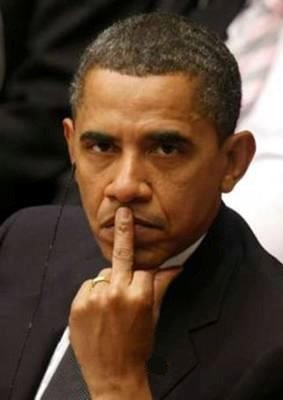
“Barack says ‘screw that’ and
so do I. That’s not possible.”
According
to the NFL, this is how Super Bowl tickets are managed:
- AFC and NFC Champions split 35%
- Host team for Super Bowl gets 6.2%
- Remaining teams split 33.6%, or 1.2% per team
- The
league gets the remaining 25.2%
Instead of being greeted with fresh Super Bowl stubs, long-time Broncos and Seahawks season ticketholders were met with fresh Super Bowl snubs. With some fans even acknowledging that they’d been in previous ticketholder lotteries for Super Bowls with a negative result. Between the outrageous prices, lengthy trips, expensive stays, and poor weather—a football game in the bitter Northeastern winter, anyone?—you might think that season ticketholder lotteries would go better for those willing to pay the price.
Given the sheer number of sponsors, involved parties, random and famous attendees—Aaron Paul was at SBXLVIII—it would seem that the NFL could be strangely bereft of tickets. You think Eli Manning paid to be in that box at the Meadowlands? No, but the Giants sure gave him a pass. You would think that the remaining teams could be interested in putting some tickets into the public market, though. Why would the Oakland Raiders want to use any of their tickets, especially last year?
The league can do whatever the hell they want to with 25% of those tickets, in the most literal way. The NFL could sell the tickets to individuals, companies, packs of wolves—those are their tickets. But, do you really suppose that Pepsi—after forking over mountains of cold hard cash, stock options for ads, and sponsorship—plans to pay $1 million in box fees at MetLife Stadium? If you think that happens, I've got a bridge to sell you!

On Scene: The Bridges of
Madison County
Not pictured: Clint Eastwood, Meryl Streep
Not pictured: Clint Eastwood, Meryl Streep
The weirdest part of the equation is that the NFL won’t say
how many tickets are available to the public—a spokesperson for the NFL said
plainly, “I can’t give you an exact number.” The Broncos
and Seahawks
wouldn't report how many tickets they’d been given for Super Bowl XLVIII. Even smaller teams are unwilling to part with a number. Honestly though, why would the Chargers even bother telling people how many ticks they got to
the big game? Not like Philip Rivers’ lanky ass was going. So the total number of tickets doesn't really dwindle or decrease. But just like that, it becomes very murky.
“Basically, if you can name a company that sponsors the NFL, there's a good chance they're giving away tickets.” The NFL gives tickets, packages, boxes, and whatever to whomever, to make the event a productive one, in the most capitalistic sense. You really think that Sports Authority or Papa John’s didn't see a single Super Bowl ticket? That’s not to shift the blame to Denver, either, because I feel like the Seahawks could have easily given lots of tickets to CenturyLink. Plus, every other team in the NFL is just the same. It’s nothing more than an additive game. And just like shit, this sludge moves downhill...

Scientific observation of fecal matter running down Hill
The only people I can be sure were offered tickets, directly at face value, were the winners of the "preseason non-season ticketholder lottery"—that’s a mouthful. There are over 30,000 requests on that lottery alone, which means at least 60,000 people. Your chances to get at seats are 0.4% based on the preseason lottery, and that is, where they say, “the trail runs cold…”
According to Josh Finkelman—he’s
suing the NFL over Super Bowl ticketing practices—the league has made just
1% or 775 tickets available—at face value. While I do not know Finkelman’s
method for figuring his number, and it certainly jives with what I've read from
irate fans…
“Barack says ‘screw that’ and
so do I. That is possible...”
Perhaps most damning voice is that of Peggy McGlone with the Newark Star-Ledger. She states that the Super Bowl is
“an insider’s game,” and that lotteries are tailored to these insiders help keep
tickets in the hands of “supporters” so that they can turn around and sell
their stubs to ticket brokers.
But, if season ticketholders aren't getting in, fanatics aren't getting in, and the rest of the public isn't getting in, just who the hell is getting those tickets…? In a nutshell, the tickets are given or hawked, or hawked and given, or given and then, hawked. There is also very little chance of pushing the tickets into a public or even grey market, let alone at a reasonable price. The average cost of a ticket as of February 1st, 2014 was $2,645.12, which is a bargain according to the New York Times. Now, imagine that you wanted a good seat...**
I’m reminded of ruminations on the Super Bowl from the Bill Murray film, “Where the Buffalo Roam,” about the incorruptible Dr. Hunter S. Thompson:
I’m reminded of ruminations on the Super Bowl from the Bill Murray film, “Where the Buffalo Roam,” about the incorruptible Dr. Hunter S. Thompson:
“The crowd had
assembled; a crowd of America America

What I’m talking about isn't foreign, it isn't new, and it
certainly isn't irreverent. It’s but the mere reexamination of an old idea in
the light of today.
Now, if you could only whip your slaves harder, say, "quadruple-your-profit" harder, you should be able to squeeze out the rest of the
scratch to buy a ticket for next year. But, if you can exploit your way past
Minute Maid on the global lemonade trade, you probably won’t have to use those extra bucks.
Ask any corporation, that’s the way to free tickets.
*Note. It’s really hard to find the
amount of lemonade sold or consumed for any interval of time.
**Note. Since the posting of this article, another NFL season has come and gone with ticketing practices unchanged.
**Note. Since the posting of this article, another NFL season has come and gone with ticketing practices unchanged.
